Ketamine clinics are booming across the US. According to psychedelic fund PsyMed, there were around 20 ketamine clinics in 2019. By the end of last year, there were reportedly over 600 independent ketamine clinics, as well as chains like Mindbloom, Field Trip and Delic with multiple clinics and home delivery services.
Read MoreLast week I drove to Sedona, in Arizona, to find out how conspirituality has affected the New Age capital of the United States.
Why did this little town of 10,000 people become such a New Age Mecca? It’s in a gorgeous location, hidden away beneath giant red-rock sandstone protrusions, like alien vessels from an ancient civilization.
Read MoreBy eugenics I refer to a programme, launched in 1883 by Francis Galton, to improve the genetic quality of human beings, through negative eugenics (preventing those deemed genetically unfit from passing on their genes, either through voluntary or involuntary sterilization, confinement, or extermination) and through positive eugenics (encouraging those deemed genetically fit to pass on their genes more, through breeding with others deemed fit, or through donating their seed to ‘genius sperm banks’).
Read MoreOn March 17 2020, a few days after the WHO had declared COVID-19 a pandemic and states had enforced lockdowns on their citizens, Oprah Winfrey’s name trended on Twitter.
Read MoreAs we’ve explored in previous newsletters, New Age culture has had something of a shocker during the pandemic. It has, in the words of Jamie Wheal, turned into a ‘rat’s nest shitshow’.
Read MoreRick Archer emerged from a troubled youth to become a leading teacher of Transcendental Meditation. 12 years ago, he left TM and started Buddha At The Gas Pump, a podcast where he interviews spiritual teachers. It now has millions of views and downloads. I talked to Rick about how spirituality has changed since he first started meditating in 1968, and how he thinks New Age culture has fared during the COVID pandemic.
Read MoreThis is an interview with Eileen Dunn, a life coach who moved to Tulum in October 2020 with her partner Alba, to run a yoga studio. She tells me about her experience of living in Tulum, one of the New Age capitals on the global wellness circuit, during the COVID pandemic.
Read MoreIn the autumn of 2020, in the middle of the pandemic, Dr Emily Grossman and her partner decided to move to Totnes, a small town in Devon that is popular with eco-hippies. Emily looked forward to escaping the Big Smoke and being surrounded by like-minded spiritual activists. A friend encouraged her to join some Totnes online chat groups. It was a rude awakening.
Read MoreThe documentary maker Adam Curtis wrote in 2010: ‘In Mad Men we watch a group of people who live in a prosperous society that offers happiness and order like never before in history and yet are full of anxiety and unease. They feel there is something more, something beyond. And they feel stuck.’
Read MoreWellness has not exactly bathed itself in glory during the pandemic. Over the last 18 months, it’s probably made the COVID crisis worse, spreading misinformation, anti-vaccine propaganda and far-right conspiracy theories.
The pandemic has brutally exposed wellness for its irrationalism, hyper-individualism, and homicidal selfishness.
Read MoreHere’s an interview I did with Jamie Wheal, author of Recapture the Rapture and co-author of Stealing Fire. We talked about his life and work, and then got stuck into western spirituality and what’s wrong with it.
Read MoreThe space tourism industry blasted off this week, with Virgin Galactic sending the first billionaire ego into orbit, before Jeff Bezos’ ego joins Richard Branson’s in the stratosphere on July 20.
A giant leap for homo sapiens, or pigs in space? You decide.
Read MoreIn the third century BC, Qin Shi Huang, the emperor of China, was obsessed with attaining immortality, so he sent his advisors throughout China to discover the elixir of eternal youth.
Today, in California, Silicon Valley billionaires are happy to spend a similar amount to try and become immortal gods.
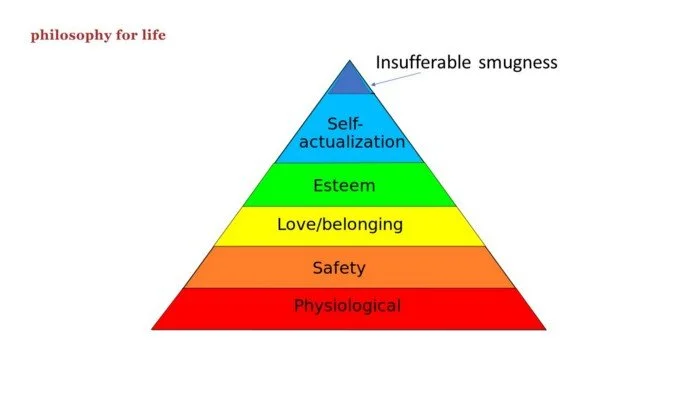
Read MoreAbraham Maslow was one of the most influential psychologists of the 20th century, who helped create humanistic psychology, transpersonal psychology, and the human potential movement. He believed he’d forged an empirical spirituality which would save the world from the modern crisis of valuelessness and meaninglessness.
Read MoreWe’re in an entirely new level of interconnection, and we’re freaking out. Breathe.
Read MoreOne of the figures in the controversial Tube protest by Extinction Rebellion is a Buddhist teacher who has embraced a new form of revolutionary Buddhism put forward by Rob Burbea. The blowback from the protest show the limits of this philosophy in practical terms.
Read MoreRowan Williams on the role that mysticism and spirituality can play in helping us confront the systematic unreality of our economic and cultural system.
Read MoreWe’re so used to stories of snowflake students having meltdowns over Halloween costumes that it’s refreshing to remind ourselves they really can change the world for the better.
Read MoreI was walking to the Extinction Rebellion protest last weekend, and I suddenly started crying.
Read MoreApologies for the delay in writing. I’ve been in California for the last three weeks, immersed in preparing for Burning Man, then going to Burning Man, then recovering from Burning Man.
Read MoreHow are you feeling? How well are you? Is your weight where you want it to be? Smoking too much? How happy are you on a scale of one to ten? Are you optimising your personal brand? How fast was your last five kilometre run? Would you like to share that via social media? Would you like a life-coach to help you overcome these challenges on a way to a better, happier, more awesome you?
Read MoreWatch out folks. There is a murky world lurking behind the scenes, a sinister cabal of policy-makers, psychologists, CEOs, advertizers and life-coaches, watching you, measuring you, nudging you, monitoring your every smile, all to try and make you happy. We must resist. This, broadly, is the message of sociologist William Davies’ book, The Happiness Industry: How Government and Big Business Sold Us Well-Being.
Read MoreThe documentary maker Adam Curtis wrote in 2010: ‘In Mad Men we watch a group of people who live in a prosperous society that offers happiness and order like never before in history and yet are full of anxiety and unease. They feel there is something more, something beyond. And they feel stuck.’
Read MoreAs most of you know, I'm working on a book about the place of ecstatic experiences and altered states of consciousness in post-religious / secular / rationalist society.
Read MoreIt's been a busy couple of weeks, hence no newsletter last week. I feel like I am spinning plates at the moment. Luckily I'm off to Cornwall tomorrow to take it easy with some good friends. In the meantime, here are three insights I have taken from this weekend's wild adventure.
Read MoreMy great-great-great grandfather, a York Quaker called Henry Isaac Rowntree (that's him on the left), set up Rowntree's chocolate company in York in 1862. He was an amiable young man, 'perhaps the only Rowntree with a sense of humour' according to one historian.
Read MoreI went to the book-launch of a new book on well-being policy yesterday, which brought together some leading figures in this nascent movement - including David Halpern of the government’s ‘nudge unit’, Canadian economist John Helliwell, psychologist Maurren O'Hara, and Juliet Michaelson of the new economics foundation.
Read MoreI attended a seminar on wonder at the Centre for Medical Humanities in Durham last week. This post comes from our discussions there. Thanks to all the participants and to Martyn Evans for a great day.
Read MoreI was up in east Scotland on New Year's Day, and found myself walking along a path called the John Muir Way. A few days later, a book I was reading mentioned a famous naturalist called John Muir, so I looked him up. It turns out John Muir was a father of modern conservationism, and the founder of many of California’s national parks. He is also a perfect specimen for my research into ecstatic experiences in nature.
Read MoreSteven Pinker, the Harvard cognitive linguist, would not make a very good ambassador. In his latest diatribe, he attempts to reassure humanities scholars that science is not their enemy. Science is good, and humanities scholars should stop complaining about 'Scientism'. Unfortunately, he says this in such a tactless and, er, Scientistic way that it’s guaranteed to annoy not just humanities scholars, but no doubt many scientists too.
Read MoreIs it possible to for a professional sports team to put character before external success? I visited Saracens rugby club to find out.
Read MoreImagine, if you will, the scene. The Enlightenment has defeated Religion, and its various champions meet to carve up the vanquished enemy’s territories. Philosophy takes the chair: ‘Right then, settle down everyone. Thank you. Now, let’s see...Religion used to offer ethics and laws.
Read MoreI’m in Holland again, this time in Utrecht, where yesterday I did a three-hour workshop at the University of Humanistic Studies. It was gratifying to have lots of bright students scrutinising my ideas, though also grueling in so far as the students very intelligently saw the limitations of Stoic philosophy.
Read MoreBig day today. I’ve finally finished my report on grassroots philosophy groups, which you can download here: Connected Communities- Philosophical Communities.
Read MoreA global bank's reputation is at rock bottom after a string of money-laundering scandals, fraud cases, and government bail-outs. A new CEO is appointed, with a mission to clean up the bank’s profile. He introduces a ‘five point ethics plan’, including strengthened risk controls, more enlightened incentives for bankers, an 'ethics hot-line', and a huge ethics training programme for the company’s 300,000 employees - arguably the biggest ethics training initiative in the history of American business.
Read More